See a doctor online today — by video or phone
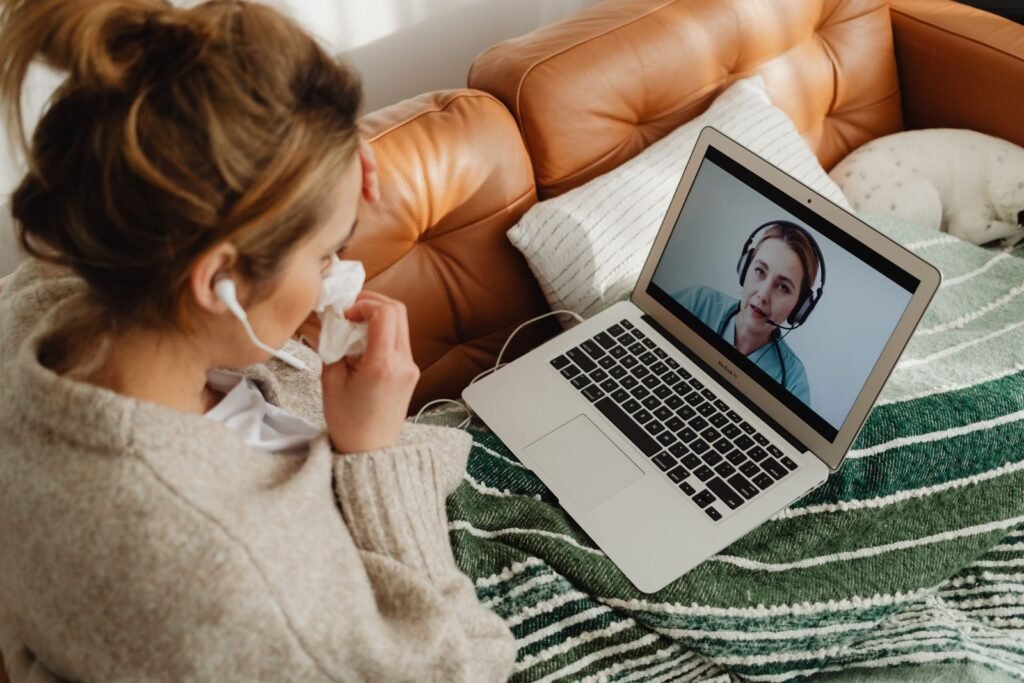
Book an IMC-registered doctor in a couple of minutes. The doctor calls you at your chosen time, or you join by video if you’d rather be seen. Prescriptions go straight to your pharmacy; sick notes and referral letters arrive as signed PDFs. From €34.99 by phone, €39.99 by video.
- From €34.99 by phone · €39.99 by video
- IMC-registered Irish doctors
- Early morning to late evening, 7 days
- English, Spanish and Portuguese
Book your consultation
Choose phone or video, pick a time that suits you and pay by card. You’ll get a confirmation email straight away.
Select a Service
An IMC-registered doctor will see you at your chosen time — by phone or video
Choose Date & Time
Select a date, then pick an available slot
Prefer an app? Book in the DocOnCall app, our sister service, and get 20% off your first app booking with code DOCAPP20.
DocOnCall and OlaDoc are both run by IE HEALTHNOW LIMITED · app bookings only · opens in a new tab
- 📞 The doctor calls you — no waiting room
- ✅ IMC-registered Irish doctors
- 🕑 All times are Irish time
Your Details
All fields marked * are required
Secure payment next — you won't be charged until you confirm.
Having trouble making payment or securing your slot? 💬 WhatsApp our support team
Review & Pay
Confirm your booking details below
256-bit SSL encryption · Google Pay & card accepted
Refundable if you cancel at least 6 hours before the appointment — see our Cancellations & Refunds policy.
What an online consultation is good for
Everyday illness
Coughs, colds and chest infections, sore throats, ear and sinus trouble, urinary infections, tummy bugs, rashes and skin flare-ups, allergies and hay fever. Most of what sends people to a waiting room can be sorted from your sofa.
Prescriptions and repeats
New prescriptions where they are clinically appropriate, and repeat prescriptions for stable, ongoing conditions — sent electronically to the pharmacy you name at booking. Controlled drugs are never prescribed online.
Notes, certificates and letters
Sick notes and fit-to-work certificates, referral letters, attendance and travel certificates. Each is a signed PDF you can verify online, emailed to you and kept in your patient portal.
Nerves before a presentation, exam or performance? We also offer a performance and stage anxiety consultation.

Phone or video — you choose
Most people are happy with a phone call: the doctor rings you at your booked time, wherever you are. Choose video if there’s something the doctor should see, such as a rash, or if you’d simply rather talk face to face. Video costs €5 more.
How it works
Book online
Pick video or phone, choose a time that suits — same-day slots run from early morning to late evening, seven days a week — and tell us briefly what’s wrong. Pay securely by card.
The doctor calls you
At your booked time the doctor rings the number you gave. For a video consultation you join from the link in your confirmation email, after a quick camera and microphone check.
Sorted
Your prescription is on its way to your pharmacy before you hang up. Any documents are emailed as signed PDFs and stored in your portal, where you can also reschedule or cancel.
A real consultation, not a questionnaire
You talk to a doctor in real time. They take a proper history, ask follow-up questions and explain their advice, just as they would face to face. If they think you need to be examined in person, they’ll tell you so and where to go.
Your doctors
Every OlaDoc consultation is with a doctor on the Irish Medical Council register. You’ll see the doctor’s name and registration number when you book.
Dr Sibghatullah Babar
Medical Council registration 507193. MBBS. Online consultations by video and phone.
Dr Diego Antonio Rodriguez Van Sijtveld
Medical Council registration 517088. MBBS. Consultations in English, Spanish and Portuguese.
Dr Mujtaba Javed
Medical Council registration 509115. Online consultations by video and phone.
Dr Norman Nigel Darling
Medical Council registration 535859. Online consultations by video and phone.
Home visits — coming soon
OlaDoc is bringing back something Irish medicine has largely lost: the house call. We are onboarding Garda-vetted doctors for in-person home visits, county by county, starting with Dublin. Read about home visits — and until they launch, an online doctor is a few taps away.
When not to book
OlaDoc is not an emergency service. Chest pain, difficulty breathing, signs of stroke, heavy bleeding, a severe allergic reaction, or any situation where a life may be at risk: call 112 or 999 now. An online doctor also can’t examine you physically — if the doctor thinks you need to be seen in person, they’ll say so and tell you where to go.